 By Slawomir Bielecki · 18 June 2026 · 3 min read

Over the past few months I've heard the same thing from therapist after therapist: the referrals just aren't coming in like they used to. Fewer from the directories. Fewer overall.
If that's you, I'll be honest. This isn't a blip you can wait out, and hoping things "go back to normal" is the worst thing you can do right now.
I understand why it feels this way. For years the directories did the heavy lifting. You set up a profile, paid your fee, and the enquiries trickled in. The phone rang on its own. Nobody ever taught you what to do when that tap slows to a drip.
That's what this is for. First, the mindset shift:
Most therapists treat referrals as something that happens to you. Something outside our control, like the weather. So when they dry up, the instinct is to wait for the season to change.
But referrals aren't a tide you wait on. They're a channel you build.
Relying on directories is like fishing in one pond and hoping it never runs dry. When it does, you don't sit on the bank blaming the pond. You go and find more water.
So let's find more water. Here are the four reasons your referrals are dipping, and what to do about each.
- You're renting your visibility instead of owning it.
When a client finds you through a directory, the directory owns that relationship, not you. Their traffic, their ranking, their algorithm decides whether you get seen this month. The moment any of that shifts, you go quiet, and there's nothing you can do about it.
That's the trap of building on someone else's land. You can be moved off it at any time, without warning.
The fix: start building assets you actually control. Your own website ranking on Google. Your own email list. Your own relationships. These don't disappear when a directory changes its rules.
2. The directories are more crowded than ever.
There are more therapists listed today than ever before, all sharing the same profile templates and the same dropdown specialisms. You're not invisible because you did something wrong. You're invisible because you look exactly like the 200 profiles around you.
The fix: pick a clear niche and write your profile for the client's problem, not your CV. Clients aren't scanning for "integrative, person-centred, CBT-informed." They're scanning for the thing keeping them up at night. Speak to that and you stop blending in.
3. You stopped nurturing the people who used to refer you.
GPs, other therapists, past clients, your old supervisor. These referrers don't dry up because they think less of you. They dry up because you went quiet, and out of sight really does mean out of mind. People refer the name they remembered this week, not the one they met two years ago.
The fix: be proactive, not reactive. A short quarterly email. A thank-you when someone sends you a client. A coffee with a colleague who works with a population you don't. Staying top of mind isn't pushy. It's professional, and it's the cheapest source of clients you'll ever have.
4. You have no channel of your own to fall back on.
Here's the uncomfortable bit. When the directories were enough, there was no reason to build anything else, so most of us didn't. Now they're not enough, and there's no safety net underneath.
That's why one bad month can feel like a crisis. There's nothing else carrying the weight.
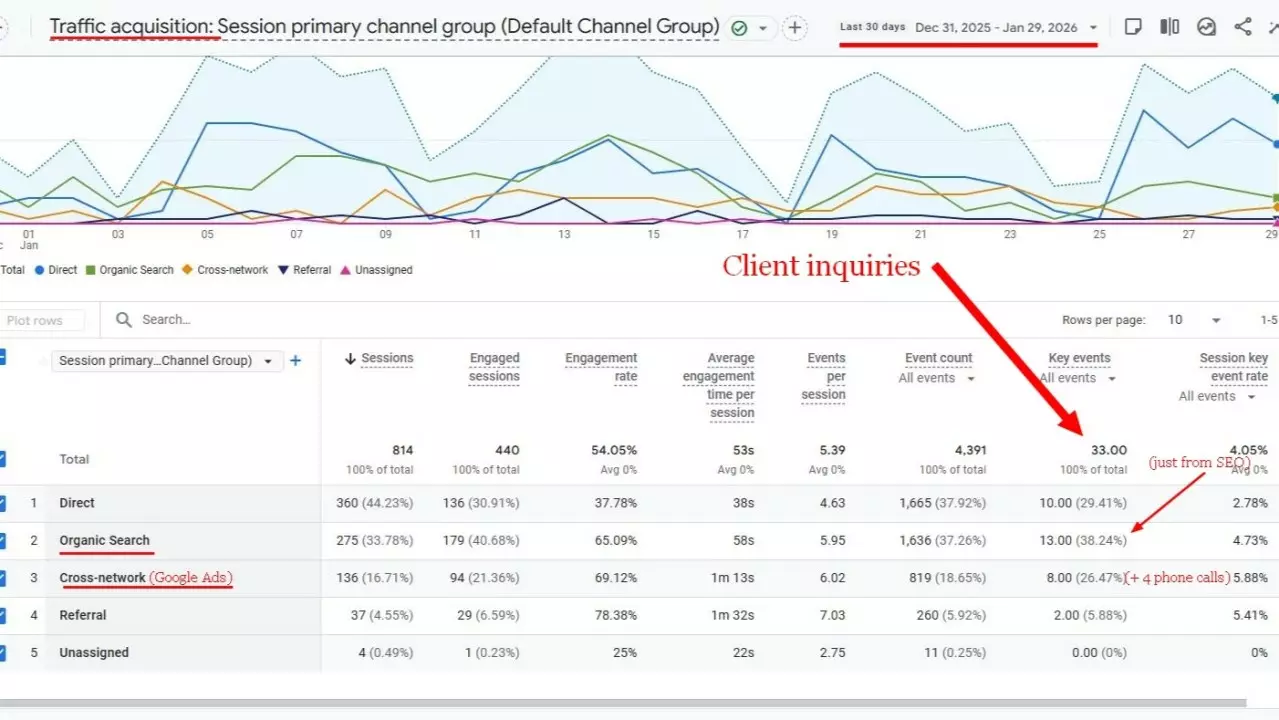
The fix: get found on Google for the searches your clients are actually typing. When someone searches "anxiety therapist in [your town]," your website should be the one they find. And it's not just Google now: tools like ChatGPT read these same sites when people ask them for recommendations, so a strong site increasingly means getting named there too. This is the channel that compounds. Every month you invest in it, it works harder, and unlike a directory listing, you own it forever.
What to do next:
Referrals were never something to wait for. They're something to build. The therapists riding out this dip without panicking aren't lucky. They simply stopped depending on a single pond a long time ago.
Old ways won't open new doors. If your referrals have slowed and you want a steady flow of clients that doesn't live or die by one directory's algorithm, send me a message. Let's build something you actually own.
First published on LinkedIn.

Since 2020 I have helped over 100 therapists, counsellors and psychologists in the UK and the US get found online by the clients who need them. You always talk to me directly, not a salesperson or AI.